

Our Tribal Scholars for Health & Sustainability (TSHS) Program is a virtual educational opportunity designed to provide students and recent graduates with hands-on experience in public health and policy while working closely with Tribal communities. Through this program, Tribal Scholars will collaborate with passionate public health and health policy professionals on impactful projects focused on improving health outcomes across Indian Country. This program is an excellent opportunity for students and recent graduates who want to make a tangible impact on Tribal public health.
As a Tribal Scholar, students and recent graduates will work on projects aligned with their specific interests, such as environmental health, infectious diseases, maternal and child health, public health infrastructure, federal relations, and many more. Throughout the program, Tribal Scholars will develop skills, expand their professional networks, and gain a deeper understanding of public health and policy on a national level.
This is a virtual educational opportunity designed to provide students and recent graduates with exposure to public health topics impacting Tribal communities. The program is open to all qualified applicants, including those who may not typically have access to such opportunities and who are currently enrolled in any post-secondary program including Tribal Colleges and/or Universities (TCUs), and recent graduates of these programs.
All Tribal Scholars will receive a $3,600 educational award and travel support to attend an in-person training course in Washington, D.C.
Hours: 180 hours total, completed, part-time, Monday-Friday
Program Dates: May 28, 2025- July 31, 2025
Location: Remote; Tribal Scholars will be required to travel to Washington, D.C. July 28- July 31, 2025 (the final week of the program). NIHB will cover the cost of travel.
Students will:
Student deliverables
**Additional deliverables may be required for those students who want academic credit.
Scholars will receive an educational stipend award for participating in the TSHS Program. This award, $3,600, is intended to support educational expenses, technology needs, and cost-of-living assistance during the TSHS Program. It is not a wage or salary, and participation in the TSHS Program does not constitute employment with NIHB.
If a Scholar is unable to complete the full program, the stipend will be adjusted based on the number of weeks completed. The final stipend among will be determined at NIHB’s discretion, considering factors such as the Scholar’s participation, learning progress, and an extenuating circumstance.
Applicants must possess or be in pursuit of a certificate, associates, bachelor’s or master’s degree in public health, policy, Native American studies, or a related subject area. Students should demonstrate prior involvement in American Indian and Alaska Native (AI/AN) communities, which could include leadership, volunteer work, or participating in cultural events, or have demonstrated interest with working in Tribal communities. No GPA required.
Event | Date |
Application Opens | April 11, 2025 |
Application Closes | May 9, 2025 |
Selected students notified | May 19-20, 2025 |
Program start | May 28, 2025 |
Travel to Washington, D.C. | July 28- July 31 |
Program ends | July 31, 2025 |
The TSHS Program is a ten-week educational training program for students and recent graduates interested in Tribal public health and policy.
The program is open to anyone currently enrolled in post-secondary programs or recent graduates from Tribal Colleges and Universities (TCUs).
A recent graduate is an individual who has completed their graduation within 12 months prior to the TSHS Program’s start date. For instance, applicants for 2025 TSHS Program cycle must have graduated anytime in 2024.
The TSHS Program will provide a stipend for $3,600 for each student participating in the program. It is not a wage or salary, and participation in the program does not constitute employment with NIHB.
The program runs from the week of May 19, 2025, to the week of July 31, 2025, with the last week taking place in-person in Washington, D.C.
The benefits of the TSHS program include a paid stipend and travel to Washington, D.C. during the final week of the program. Students will also have the opportunity to network with public health and health policy professionals, which can be valuable for future career prospects. Also, the program offers skill development that will enhance employability after graduation, while also providing a supportive environment for personal growth and learning.
Yes, make sure to mark yes on the application and provide a contact person with your institution and submit appropriate paperwork for getting academic credit. The decision to award academic credit is based on the policies of the institution at which the student is enrolled.
The Tribal Scholars for Health & Sustainability Development Committee is a network space that facilitates members to work collectively on topics related to Tribal public health, workforce, career, and internship development. The committee will include individual and institutional members who will share knowledge, develop resources, conduct training or presentations, and participate in supporting college students or recent college graduates. Meetings will be conducted in a virtual setting with the project coordinator and/or manager and carry out a specific set of time-bound tasks and activities. Selected committee members will be compensated for their time.
Application Deadline: May 9, 2025, at 4:59 PM ET
Who should apply?
We encourage applications from individuals working in Tribal colleges and universities, as well as those in Tribal public health, energy and environmental health, workforce development, and career development fields. Candidates with experience working directly with Tribal Nations and internship development are also strongly encouraged to apply.
How to apply?
Applications can be submitted by May 9, 2025, at 4:59 PM ET using this link: https://www.surveymonkey.com/r/FT2RKFB Your application must include: a complete application form, CV or resume, and one page statement of interest.
What happens after I apply?
Once the application deadline has passed, we will review all submissions based on specific criteria. Applicants will be notified of their application status by May 16, 2025. Please note that interviews may be required as part of the selection process.
What is expected of committee members?
Compensation
Each selected committee member will receive a stipend of $500. Five committee members will be selected.
Got questions?
If you have any questions, please do not hesitate to contact [email protected]
NIHB is proud to announce the 2025 cohort of TSHS Program. These emerging leaders bring unique perspectives and commitments to Tribal health equity and their Tribal communities.

Anchorage, AK
Anchorage, AK
School: Alaska Pacific University
Major: Health Sciences with a concentration in Healthcare Management
Future school: In the fall, I will begin my MPH at University of Colorado Anschutz
Goal: I am especially interested in the ability to work with Tribal health systems in my community to strengthen data systems. These data systems play an important role in population health trends, targeting specific needs, and guiding public health strategies. Data sets can be divided into sets with benchmarks that can eventually reach the goals of an analyst. Essentially for Indigenous people and our healthcare systems, data systems are vital to us already under resourced systems of care.
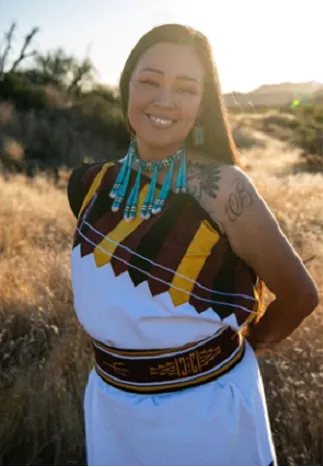
I'm from the village of Kykotsmovi on the Hopi Reservation in Arizona.
I'm from the village of Kykotsmovi on the Hopi Reservation in Arizona.
School: Arizona State University
Current degree program: Master’s in Social Work
Goal: My work and goals are directly tied to workforce infrastructure because behavioral health is critical and often underserved in Tribal communities. By becoming a licensed therapist and eventually striving to open a substance abuse treatment center on the Hopi Reservation, I aim to strengthen and expand the behavioral health workforce where it’s needed most. Not only will this provide essential services to individuals facing addiction and incarceration, but it will also create jobs and training opportunities within the community. Investing in mental health professionals and treatment resources is a key part of building sustainable, responsive workforce infrastructure, particularly in rural and Indigenous communities that have long faced barriers to care.
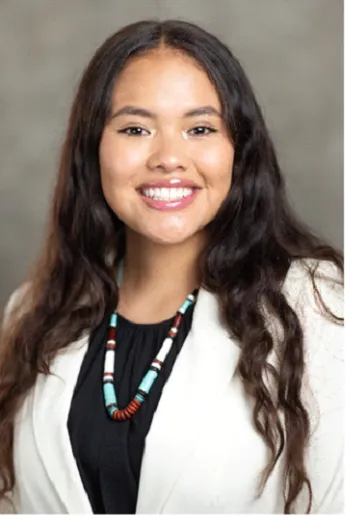
I'm from the village of Kykotsmovi on the Hopi Reservation in Arizona.
Santa Fe, NM
School: Stanford University
Major: Human Biology with a concentration in Epidemiology and Community Health
Future school: In the fall, I will begin my MPH at Dartmouth College
Goal: I’m interested in an infectious disease project because of its intersection and connection to broader public health challenges in Native communities. Many infectious diseases like hepatitis C, HIV, and even the COVID-19 pandemic disproportionately affect Indigenous populations. These are often in connection with structural issues such as lack of access to care or housing insecurity. My interest lies in how these determinants intersect these diseases in a Native population. I am also focused on the topics of substance use and mental health. For example, the rise in hepatitis C and HIV among Native people is closely linked to injection drug use and gaps in harm reduction services. Exploring these issues through an infectious disease lens allows for a syndemic approach to understanding how co-occurring epidemics affect one another. I want to use this lens to develop community-informed, culturally grounded responses that address these overlapping public health concerns.
Choose any of the updates below. You can pick more than one.
NIHB Newsletter
Our monthly flagship newsletter with organization updates, member spotlights, and program news.
Policy Alerts
Time-sensitive updates on federal legislation, regulations, and funding opportunities affecting Tribal health.
The Weekly
A short weekly roundup of what's happening across Indian Country in health policy and programs.
Trainings & Events
Upcoming webinars, conferences, and training opportunities, plus registration deadlines.